
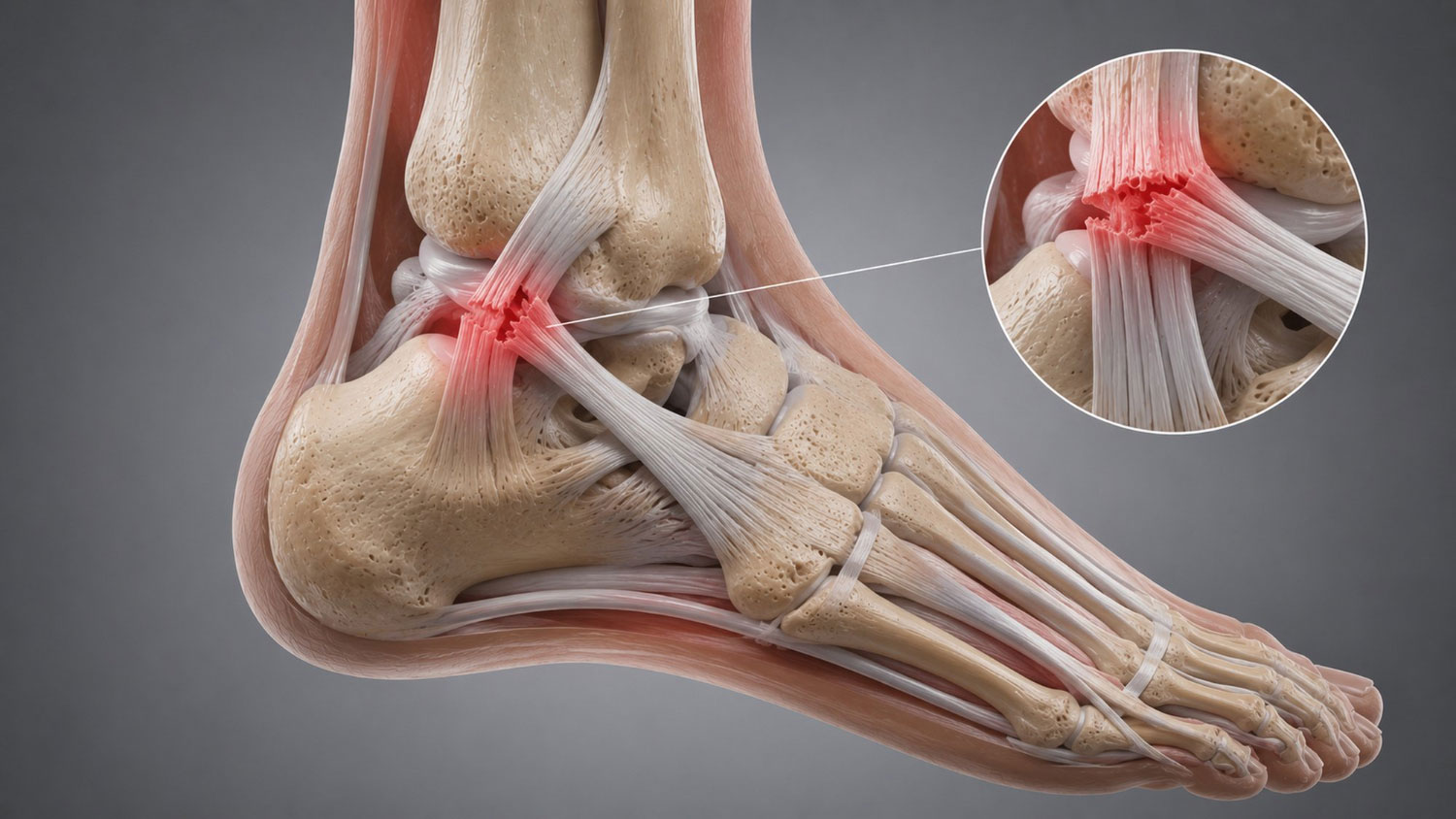
Don't Ignore a Ligament Injury That Doesn't Seem to Be Healing
An ankle sprain is one of the most common musculoskeletal injuries, but not every sprain is the same. While many mild injuries improve with rest and rehabilitation, some involve partial or complete tearing of the ankle ligaments. Left untreated, these injuries can lead to ongoing pain, swelling, repeated ankle sprains, and chronic instability.
At Liberty Orthopaedic Clinic, Dr Lee Eu Jin assesses ankle and foot ligament injuries to determine the extent of damage and recommend an appropriate treatment plan. Treatment depends on the severity of the injury, your symptoms, activity level, and whether the ankle has become unstable over time.
What Is an Ankle & Foot Ligament Tear?
Ligaments are strong bands of connective tissue that stabilise joints by connecting one bone to another. Around the ankle and foot, these ligaments help keep the joint stable during walking, running, jumping, and changes in direction.
A ligament tear occurs when these structures are stretched beyond their normal limits or rupture following a sudden twisting injury or trauma.
Most ligament injuries occur on the outer (lateral) side of the ankle, although injuries can also affect the inner ankle or the ligaments connecting the tibia and fibula higher up the ankle.

Which Ligaments Are Commonly Injured?
Anterior Talofibular Ligament (ATFL)
The ATFL is the ligament most frequently injured during an ankle sprain, particularly when the foot rolls inwards.
Calcaneofibular Ligament (CFL)
The CFL may be injured together with the ATFL in more significant ankle sprains and contributes to side-to-side ankle stability.
Posterior Talofibular Ligament (PTFL)
The PTFL is less commonly injured and is usually affected during more severe ankle injuries.
Syndesmotic Ligaments (High Ankle Ligaments)
These ligaments connect the tibia and fibula just above the ankle joint. Injuries here are commonly known as high ankle sprains and often require a longer recovery period.
What Causes an Ankle Ligament Tear?
Ligament tears often occur when the ankle twists suddenly beyond its normal range of movement.
Common causes include:
- Rolling the ankle while walking or running
- Landing awkwardly after a jump
- Sports involving rapid changes in direction, such as football, basketball or tennis
- Uneven ground or accidental missteps
- Falls or direct trauma to the ankle
Individuals who have experienced previous ankle sprains may also be at higher risk of future ligament injuries if the ankle has not fully regained its strength and stability.

What Are the Symptoms of an Ankle Ligament Tear?
Symptoms vary depending on the severity of the injury but may include:
- Sudden pain after twisting the ankle
- Swelling around the ankle joint
- Bruising
- Difficulty bearing weight
- Tenderness over the injured ligament
- A feeling that the ankle is unstable or “giving way”
- Reduced range of motion
Some people are able to continue walking after the injury despite having a ligament tear, making medical assessment important if symptoms persist.
Is It a Sprain or a Torn Ligament?
Many people use the term “sprain” to describe any ankle injury, but a sprain actually refers to injury of a ligament.
Ligament injuries are generally classified into three grades:
Grade 1
The ligament is stretched but remains intact. Mild pain and swelling are common.
Grade 2
The ligament is partially torn, resulting in moderate pain, swelling, bruising, and some joint instability.
Grade 3
The ligament is completely torn. The ankle may feel unstable and walking can be difficult.
Determining the severity of the injury helps guide appropriate treatment.
Why Does My Ankle Still Feel Unstable Months After a Sprain?
Most ankle sprains improve with appropriate rehabilitation. However, some individuals continue to experience repeated sprains or a sensation that the ankle gives way during everyday activities or sports.
This may be due to:
- Ligaments that have not healed adequately
- Persistent joint instability
- Weakness of the surrounding muscles
- Balance and proprioception deficits
- Previously unrecognised ligament injury
Persistent instability should be assessed to determine whether additional treatment may be beneficial.
How Is an Ankle Ligament Tear Diagnosed?
Diagnosis begins with a discussion of your symptoms and how the injury occurred.
Your orthopaedic surgeon may perform:
- Physical examination of the ankle
- Assessment of joint stability
- Evaluation of swelling and tenderness
- X-rays to assess for associated fractures
- MRI scans if ligament injury or associated cartilage, tendon, or bone injury is suspected
Imaging findings are interpreted alongside the clinical examination to determine the most appropriate management plan.

Can an Ankle Ligament Tear Heal Without Surgery?
Many ankle ligament injuries can be managed without surgery.
Depending on the injury, treatment may include:
- Activity modification
- Ice and elevation during the early phase
- An ankle brace or supportive boot
- Physiotherapy focusing on strength, balance and stability
- A gradual return to sport or physical activity
The recommended treatment depends on the severity of the injury and your individual functional goals.
When Might Surgery Be Considered?
Surgery is not necessary for every ligament tear.
However, it may be considered when:
- The ankle remains unstable despite rehabilitation
- Recurrent ankle sprains continue to occur
- Multiple ligaments are injured
- High-demand athletes require restoration of ankle stability
- Associated injuries require surgical treatment
Depending on the injury pattern, surgery may involve ligament repair or ligament reconstruction to restore stability to the ankle.
How Long Does Recovery Take?
Recovery varies according to:
- The severity of the ligament injury
- Whether surgery is required
- Associated injuries
- Individual healing and rehabilitation progress
Returning to sports too early may increase the risk of reinjury. A structured rehabilitation programme helps restore strength, balance, and confidence before returning to higher-level activities.
When Should You See an Orthopaedic Surgeon?
Medical assessment is recommended if you experience:
- Significant swelling or bruising after an ankle injury
- Difficulty walking or bearing weight
- Persistent pain lasting several weeks
- Repeated ankle sprains
- A sensation that the ankle repeatedly gives way
- Ongoing instability despite rehabilitation
Early assessment helps determine whether the injury is healing as expected or whether additional treatment may be appropriate.
Frequently Asked Questions
Can you walk with a torn ankle ligament?
Yes. Some people can still walk despite having a partial or complete ligament tear. However, persistent pain, swelling, or instability should be assessed.
How do I know if I have torn a ligament instead of just spraining my ankle?
A ligament sprain refers to injury of the ligament itself. The severity ranges from mild stretching to complete tearing, and an examination helps determine the extent of injury.
Will a torn ankle ligament heal on its own?
Many ligament injuries improve with appropriate non-surgical treatment and rehabilitation. Some more severe injuries or chronic instability may require further treatment.
Can repeated ankle sprains cause long-term problems?
Repeated sprains may lead to chronic ankle instability, reduced confidence during walking or sports, and an increased risk of further injury if left untreated.
Is surgery always required for an ankle ligament tear?
No. Most ankle ligament injuries can be managed without surgery. Surgical treatment is generally considered when instability persists despite appropriate rehabilitation or when there are associated injuries requiring operative management.
Concerned About an Ankle Ligament Injury?
If your ankle continues to feel painful, unstable, or repeatedly gives way after a sprain, an orthopaedic assessment can help determine the extent of the injury and discuss appropriate treatment options.
Book a consultation with Dr Lee Eu Jin at Liberty Orthopaedic Clinic to receive an individualised assessment for ankle and foot ligament injuries.