
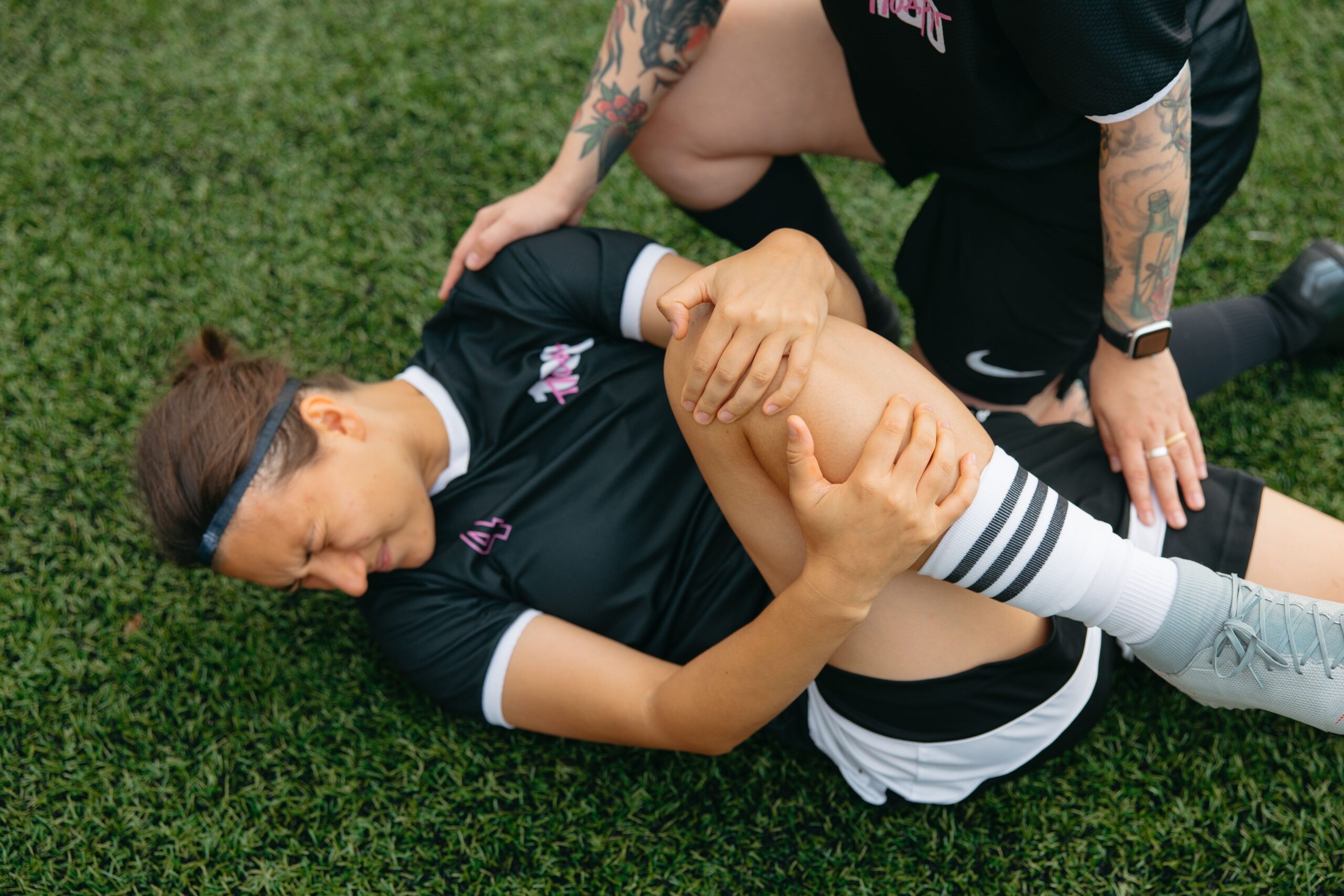
For many people, the sharp pain of an ACL injury gradually improves over time. Swelling settles, walking becomes easier, and everyday activities may feel manageable again. However, another concern often takes its place:
“Why does my knee still feel unstable even though it doesn’t hurt anymore?”
This is a common question after an anterior cruciate ligament (ACL) tear. While pain often decreases as the initial injury heals, the ACL itself may still not be functioning normally. As a result, some people continue to experience episodes where the knee feels like it may “give way,” particularly during sports or sudden changes in direction.
Key Takeaways
- Pain from an ACL tear may improve even if the ligament has not healed.
- Knee instability is one of the hallmark symptoms of an ACL injury.
- Strong muscles can temporarily compensate for a torn ACL, but they cannot replace the ligament’s function.
- Continuing high-impact activities with an unstable knee may increase the risk of additional injuries.
- Persistent instability should be assessed by an orthopaedic knee specialist.
What Does the ACL Do?
The anterior cruciate ligament (ACL) is one of the major ligaments that stabilises the knee.
It helps control:
- Forward movement of the shin bone
- Rotational movements of the knee
- Stability during pivoting, twisting, and jumping
- Overall control during sporting activities
When the ACL tears, the knee may lose some of its stability, even after pain and swelling improve.
Why Doesn’t My Knee Hurt Anymore?
Many people assume that if the pain has disappeared, the injury has healed.
Unfortunately, this is not always the case.
Immediately after an ACL tear, pain is largely caused by:
- Bleeding within the joint
- Swelling
- Inflammation
- Damage to surrounding tissues
As these settle over the following weeks, pain often improves naturally.
However, the ACL itself has a limited ability to heal completely after a full tear. While symptoms may become less noticeable, the ligament may still no longer provide the stability the knee needs.
Why Does My Knee Still Feel Unstable?
Instability occurs because the torn ACL can no longer effectively control certain movements of the knee.
People often describe instability as:
- The knee giving way
- A feeling that the knee “shifts”
- Sudden buckling during walking or turning
- A lack of confidence when changing direction
- Feeling unable to trust the knee
These episodes may happen even when there is little or no pain.
Can Strong Muscles Compensate for a Torn ACL?
Yes, to a certain extent.
After an ACL injury, the muscles surrounding the knee, particularly the quadriceps and hamstrings, often become stronger through rehabilitation.
Improved muscle strength can help:
- Support the knee joint
- Improve balance
- Reduce instability during straight-line walking
- Increase confidence during everyday activities
However, muscles cannot fully replace the mechanical role of the ACL.
Activities involving sudden pivoting, cutting, twisting, or landing from a jump may still place the knee at risk of instability.
Is It Safe to Continue Playing Sports If My Knee Feels Unstable?
This depends on several factors, including:
- The severity of instability
- The type of sport
- Your functional goals
- Associated knee injuries
Sports that involve frequent twisting or rapid changes in direction, such as football, basketball, tennis, or netball, may place greater demands on the ACL.
Repeated episodes of instability may increase the likelihood of further injury to structures such as:
- The meniscus
- Joint cartilage
- Other knee ligaments
An assessment can help determine whether your knee is stable enough for your chosen activities.
Can I Walk Normally Without an ACL?
Many people with an ACL tear can walk normally on level ground after the initial injury has settled.
This is because walking in a straight line places relatively low demands on the ACL.
However, symptoms often become more noticeable during activities such as:
- Running
- Pivoting
- Descending stairs quickly
- Uneven ground
- Sudden changes in direction
The absence of symptoms while walking does not necessarily mean the knee has regained full stability.
How Is ACL Instability Assessed?
An orthopaedic knee specialist will typically perform a detailed assessment that includes:
Medical History
Your doctor will ask about:
- How the injury occurred
- Episodes of knee giving way
- Sporting activities
- Current symptoms
- Previous knee injuries
Physical Examination
This may include tests that assess:
- Knee stability
- Ligament function
- Range of motion
- Muscle strength
Imaging
An MRI scan may be recommended to evaluate:
- The ACL
- Meniscus injuries
- Cartilage damage
- Other associated ligament injuries
A functional assessment helps determine how the knee performs during movement rather than relying on pain alone.
When Is Surgery Considered for an ACL Tear?
Not everyone with an ACL tear requires surgery.
Treatment recommendations depend on factors such as:
- The level of instability
- Age
- Activity level
- Occupational demands
- Associated injuries
- Personal goals
Some people are able to manage well with rehabilitation alone, while others may continue to experience instability that affects daily activities or sports participation.
An orthopaedic surgeon can discuss whether continued rehabilitation or ACL reconstruction is appropriate for your situation.
What Should I Do If My Knee Keeps Giving Way?
If your knee repeatedly feels unstable, it is important not to ignore the symptoms.
Persistent instability may affect your ability to:
- Exercise confidently
- Participate in sports
- Climb stairs
- Carry heavy loads
- Maintain an active lifestyle
An early assessment may help identify whether additional treatment or rehabilitation is needed before further damage occurs.
Frequently Asked Questions
1. Can an ACL tear stop hurting even if it hasn’t healed?
Yes. Pain often improves as swelling and inflammation settle, even though the ACL may remain torn.
2. Why does my knee buckle even though it doesn’t hurt?
Buckling is usually related to instability rather than pain. A torn ACL may no longer provide enough support during certain movements.
3. Can physiotherapy make my ACL heal?
Physiotherapy cannot repair a completely torn ACL, but it can improve muscle strength, stability, balance, and knee function.
4. Is it safe to run with a torn ACL?
Some people can return to running after rehabilitation, while others continue to experience instability. This depends on the individual and should be discussed with an orthopaedic specialist.
5. How do I know if I need ACL reconstruction?
The decision depends on several factors, including your symptoms, knee stability, activity level, lifestyle, and treatment goals. A specialist assessment can help determine the most appropriate approach.
Don’t Ignore a Knee That Doesn’t Feel Stable
Even if the pain from an ACL injury has improved, ongoing instability may indicate that your knee has not fully regained its function. Identifying the cause early can help guide appropriate treatment and reduce the risk of further knee injuries.
Dr Lee Eu Jin, Consultant Orthopaedic Surgeon at Liberty Orthopaedic Clinic, assesses and manages ACL injuries, sports-related knee conditions, and ligament injuries. During a consultation, he can evaluate your knee stability, review your imaging, and discuss treatment options based on your symptoms, activity level, and goals.
Book an appointment with Liberty Orthopaedic Clinic to better understand why your knee feels unstable and explore the treatment options available.