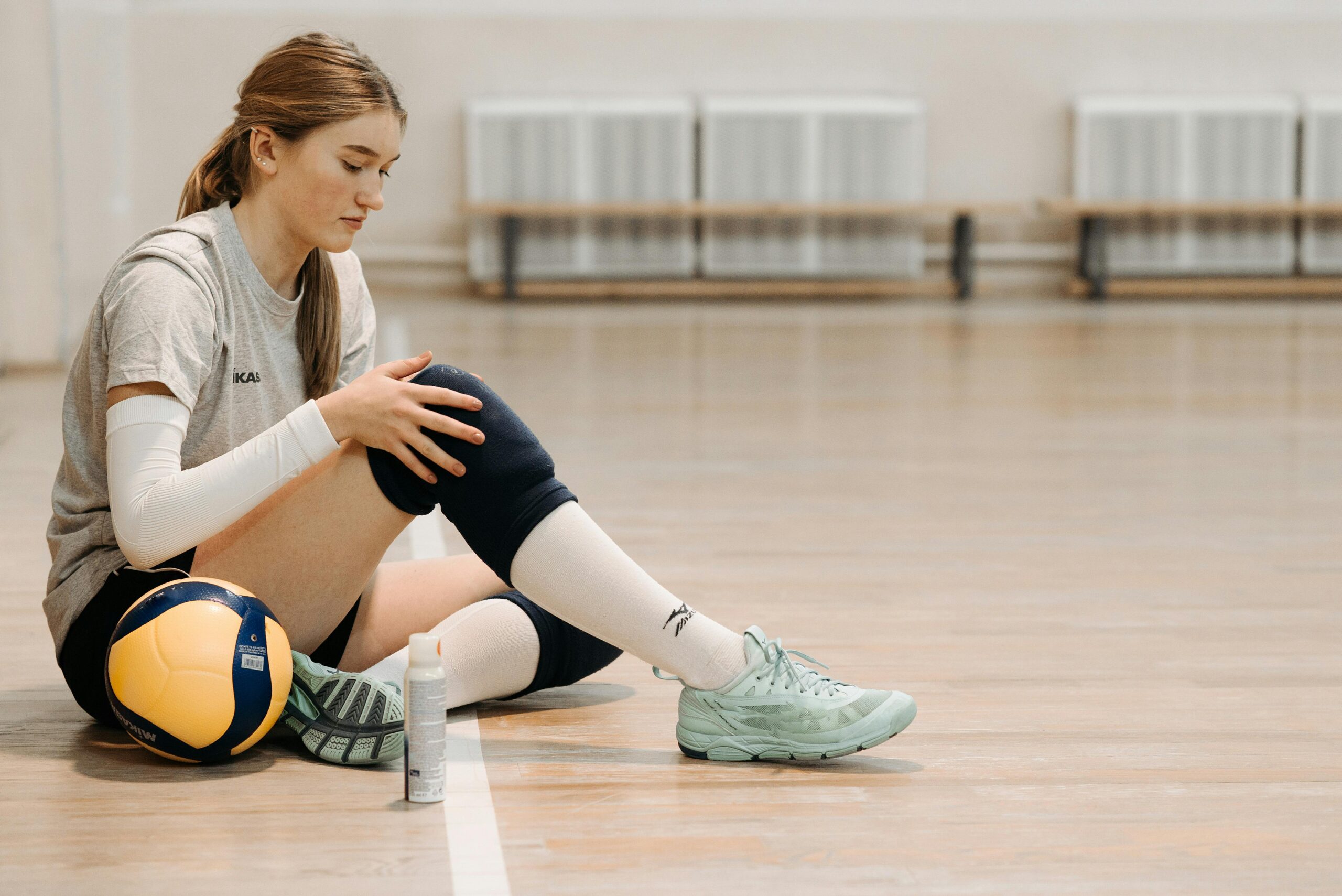
You finish a run, gym session or game feeling completely fine. Then, minutes or hours later, your knee starts aching. Why does the pain appear only after the activity has ended?
This pattern of knee pain after sports can be easy to dismiss, especially when the knee feels normal while you are exercising. However, pain that appears after activity can sometimes be a sign that the knee is being placed under more stress than it can comfortably manage.
Key Takeaways
- Pain may become noticeable only when the knee is no longer warmed up and moving.
- Repetitive activities such as running, jumping or squatting can place repeated stress on the knee.
- The location, timing and nature of the pain can provide useful clues about what may be happening.
- Continuing to exercise through recurring pain may make it harder to identify and manage the underlying problem.
Why can my knee feel fine while I exercise but hurt afterwards?
Exercise increases blood flow and warms up the muscles and tissues around your joints. Movement may also make the knee feel more comfortable temporarily.
But feeling fine during exercise does not necessarily mean the knee is free from strain. As activity continues, structures around the knee may be repeatedly loaded. Once you stop, you may become more aware of discomfort that was less noticeable while you were moving.
The type of activity matters too. Running, court sports, hiking, cycling and strength training all place different demands on the knee. Common reasons for pain after exercise may include,
- Overuse from increasing training intensity or duration too quickly
- Repetitive impact from running or jumping
- Irritation around the kneecap
- Muscle weakness or imbalance affecting how the knee moves
- Previous knee injuries that have not fully settled
- Inadequate recovery between demanding workouts
This does not mean every post-exercise ache indicates an injury. Occasional soreness after unfamiliar activity can occur. What matters is whether the pain keeps returning, becomes more noticeable or starts affecting everyday movement.
Could my exercise routine be causing the pain?
Sometimes, the issue is not one particular exercise but how much stress your knee is receiving overall. For example, you may have recently,
- Increased your running distance or speed
- Added more squats, lunges or jumps
- Returned to sport after a long break
- Started training on a different surface
- Increased the number of training sessions each week
- Reduced rest or recovery time
Your muscles and joints need time to adapt to changes in training load. A sudden increase can leave the knee struggling to tolerate the additional demand.
What does the timing of my knee pain tell me?
Pay attention to when your pain appears. Pain immediately after exercise may feel different from discomfort that develops several hours later or the following morning. You should also notice whether it occurs while climbing stairs, sitting for a long time, squatting or simply walking.
You should seek medical assessment if your knee pain is persistent or accompanied by,
- Swelling
- Locking or catching
- A feeling that the knee is giving way
- Difficulty bearing weight
- Significant pain following an injury
- Reduced movement
- Pain that repeatedly returns after sports
These symptoms may need assessment rather than simply more rest.
Should I stop exercising if my knee hurts after sports?
Not every ache means you must stop all physical activity. However, repeatedly pushing through pain without understanding its cause may not be helpful.
Consider reducing activities that clearly trigger your symptoms and allow adequate recovery. Low-impact movement may be more comfortable for some people, but the appropriate activity depends on the individual cause of the pain.
If symptoms continue despite modifying your activities, a medical assessment can help determine what is contributing to the pain and whether further treatment or rehabilitation is appropriate.
Frequently Asked Questions
Is knee pain after exercise always a sign of injury?
No. Temporary soreness can occur after unfamiliar or strenuous activity. However, recurring, worsening or activity-limiting pain should not simply be ignored.
Why does my knee hurt hours after exercising?
Pain can become more noticeable after activity as the effects of repeated loading become apparent. The exact reason depends on the structures involved and the type of exercise performed.
Can I continue playing sports with knee pain?
It depends on the cause and severity of the pain. If an activity repeatedly triggers symptoms, reducing or modifying it until the knee is assessed may be appropriate.
When should I see a doctor for knee pain after sports?
Consider seeking medical attention if pain keeps returning, interferes with daily activities, or occurs with swelling, locking, instability, difficulty bearing weight or significant injury.
Can knee pain after sports be prevented?
Gradually increasing training load, allowing recovery between demanding sessions and addressing strength or movement issues may help reduce the risk of recurring symptoms. However, prevention depends on the underlying cause.
When should you get your knee pain checked?
A knee that feels fine during exercise but repeatedly hurts afterwards is worth paying attention to. The pattern of pain, your activity level and any associated symptoms can help a doctor assess what may be contributing to it.
If you are experiencing persistent knee pain after sports in Singapore, consider arranging a consultation at Liberty Orthopaedics Clinic with Dr Lee Eu Jin for an appropriate assessment. Understanding the cause can help you make informed decisions about your next steps rather than simply exercising through recurring discomfort.